
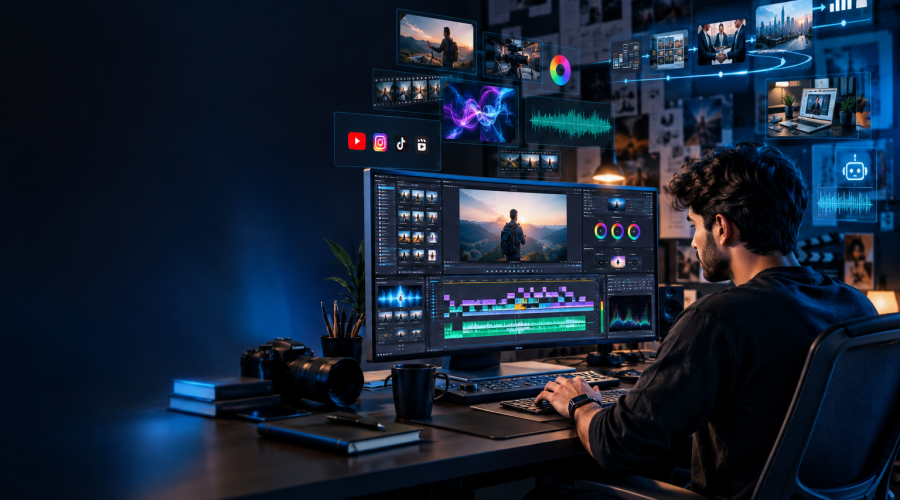
How to Become a Video Editor: Skills, Tools & Career Options
Video has become one of the most powerful forms of communication in the digital world. From YouTube videos and Instagram Reels to advertisements, online courses, corporate content and films, video is now everywhere. Behind most engaging videos is a skilled editor who turns raw footage into a polished and meaningful story.
If you are creative, enjoy working with technology and want a career that combines storytelling with digital skills, learning how to become a video editor can be an excellent choice.
The good news is that you do not necessarily need an expensive degree or professional camera equipment to begin. What matters more is developing strong editing fundamentals, learning professional software, practising regularly and creating a portfolio that demonstrates your abilities.
In this guide, we will explain how to become a video editor, which skills you should learn, the best tools to consider, career opportunities available in India and how you can start building your career from Sirsa, Haryana.
What Does a Video Editor Do?
Before learning how to become a video editor, it is important to understand what the profession actually involves.
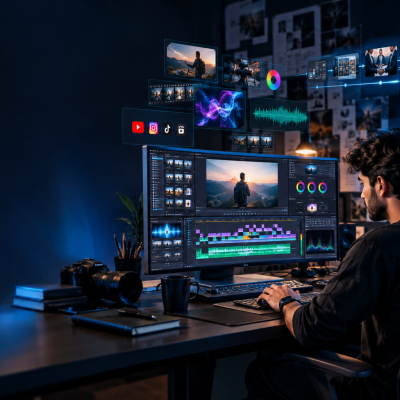
A video editor takes raw footage and transforms it into a finished video. This can include selecting the best clips, arranging scenes, trimming unnecessary footage, adding music, improving audio, creating titles, applying colour corrections, adding visual effects and exporting the final video in the required format.
However, professional video editing is much more than simply cutting clips together. An editor needs to understand:
- Storytelling and visual flow
- Pacing and timing
- Music and sound
- Colour correction
- Transitions
- Text and graphics
- Audience attention
- Platform requirements
- Client requirements and feedback
According to Indeed India, video editors combine creative and technical skills to shape raw footage into engaging visual stories.
This is why learning how to become a video editor involves developing both software knowledge and creative judgement.
Is Video Editing a Good Career in India in 2026?
Yes, video editing can be a strong career option in 2026, particularly for people who are willing to develop skills beyond basic editing.
Businesses increasingly use videos for marketing, education, advertising and social media. YouTube creators require regular long-form videos and Shorts, while brands need Reels, promotional videos and advertisements.
There are also opportunities in:
- Digital marketing agencies
- YouTube channels
- Production houses
- Advertising agencies
- OTT and entertainment
- Educational companies
- Corporate organisations
- Wedding and event production
- Freelancing
- Personal brands and creators
Recent career guides also highlight that video editing opportunities now extend far beyond films and television, with social media, advertising, creator content and corporate communication creating additional demand.
For students in Sirsa and other parts of Haryana, this creates an interesting opportunity because video editing can be learned locally and used to work with clients across India or even internationally.
How to Become a Video Editor: Step-by-Step Roadmap
If you are wondering how to become a video editor from scratch, you do not have to learn everything at once.
Follow a structured roadmap.
1. Learn the Fundamentals of Video Editing
Start with the fundamentals before worrying about advanced effects.
Learn how to:
- Import and organise footage
- Create sequences
- Cut and trim clips
- Use the timeline
- Add music
- Sync audio
- Use transitions
- Add text
- Adjust basic colours
- Export videos
Understanding why a cut works is more important than knowing hundreds of effects.
A beginner who understands pacing and storytelling can create a better video than someone who knows complicated effects but does not understand the story.
2. Choose Professional Video Editing Software
One of the most important steps in learning how to become a video editor is choosing the right software.
Some popular options include:
Adobe Premiere Pro
Premiere Pro is widely used for professional video editing and is a strong choice for editors who want to work with agencies, creators and production teams.
DaVinci Resolve
DaVinci Resolve combines editing, colour grading, visual effects and audio tools. Its powerful free version also makes it attractive for beginners.
Adobe After Effects
After Effects is particularly useful for motion graphics, animated text, visual effects and compositing.
Final Cut Pro
Final Cut Pro is popular among Mac users and offers a professional editing workflow.
You do not need to master every application immediately. Start with one editing programme and become genuinely comfortable with it before adding more tools.
Current career guides commonly recommend Premiere Pro, DaVinci Resolve and After Effects as important tools for aspiring editors.
3. Develop Storytelling Skills
Software alone will not make you a great editor.
One of the most important parts of understanding how to become a video editor is learning visual storytelling.
Ask yourself:
- What is the purpose of this video?
- Who is watching it?
- Which parts are important?
- Where should the video become faster?
- Where should there be a pause?
- Which shot communicates the idea best?
- Does the music support the emotion?
A good editor knows when to cut, when to hold a shot and when to remove something completely.
This skill becomes particularly important when editing YouTube videos, advertisements, documentaries and social media content.
Essential Skills Every Video Editor Should Learn
If you want to understand how to become a video editor professionally, focus on building a combination of technical and creative skills.
1. Editing and Pacing
You should be able to create smooth cuts and maintain the viewer's attention.
Different content requires different pacing. A YouTube vlog may need a different editing rhythm from a corporate presentation or Instagram Reel.
2. Colour Correction and Colour Grading
Colour can dramatically change the appearance and mood of a video.
Learn basic concepts such as:
- Exposure
- Contrast
- White balance
- Saturation
- Skin tones
- Colour matching
- Creative grading
DaVinci Resolve is particularly well known for its colour-grading capabilities.
3. Audio Editing
Poor audio can make an otherwise excellent video feel unprofessional.
Learn how to:
- Remove unwanted noise
- Balance dialogue and music
- Adjust volume
- Add sound effects
- Sync audio
- Use appropriate background music
4. Motion Graphics
Basic motion graphics can make your videos more engaging.
You can learn:
- Animated titles
- Lower thirds
- Logo animations
- Captions
- Kinetic typography
- Simple visual effects
Learning After Effects can be particularly valuable if you want to move towards motion graphics and advanced post-production.
5. Communication
Professional editors frequently receive feedback from clients, directors, marketing teams or content creators.
You need to understand a brief, ask useful questions and make revisions without losing the video's purpose.
6. Time Management
Editors often work with deadlines.
A client may need a Reel today, a YouTube video tomorrow or several advertisements within a week.
Learning shortcuts, templates and efficient workflows can significantly improve your productivity.
7. Attention to Detail
Small mistakes can make a video look unfinished.
Check for:
- Spelling mistakes
- Audio peaks
- Unwanted frames
- Incorrect cuts
- Inconsistent colours
- Missing captions
- Wrong aspect ratios
- Export errors
Attention to detail is one of the skills highlighted by professional career guidance for video editors.
Build a Video Editing Portfolio
One of the most important steps in learning how to become a video editor is creating a portfolio.
Do not wait for your first client before creating one.
Instead, create your own projects.
For example, you could produce:
- A 30-second product advertisement
- An Instagram Reel
- A YouTube intro
- A cinematic travel edit
- A short promotional video
- A talking-head YouTube edit
- A motivational video
- A business advertisement
- A before-and-after colour-grade example
Your portfolio should demonstrate different abilities rather than containing twenty versions of the same edit.
Try to show your strongest work first.
A short, well-edited showreel can also be useful when approaching agencies, creators and freelance clients.
Do You Need a Degree to Become a Video Editor?
A degree can be useful, but it is not the only route.
For people researching how to become a video editor, practical skills and demonstrable work are extremely important.
You can learn through:
- Online courses
- Training institutes
- Self-learning
- YouTube tutorials
- Internships
- Freelance projects
- Personal projects
- Workshops
A structured course can help beginners follow a curriculum instead of jumping randomly between tutorials.
However, completing a course is only the beginning. You still need to practise, create projects and build a portfolio.
Career Options After Learning Video Editing
Understanding how to become a video editor also means understanding where the skill can take you.
Video Editor
You can work as an editor for a company, production house, agency or creator.
YouTube Video Editor
YouTube creators regularly need editors for long-form videos, Shorts, interviews and podcasts.
Social Media Video Editor
Brands and agencies need editors to create Reels, advertisements, promotional content and other short-form videos.
Motion Graphics Designer
If you combine video editing with After Effects, you can move towards motion graphics and animation.
Corporate Video Editor
Companies produce training videos, presentations, product videos, internal communications and promotional content.
Post-Production Assistant
Production companies may hire beginners to help with footage organisation, editing preparation and post-production workflows.
Freelance Video Editor
Freelancing provides the flexibility to work with multiple clients.
You can find clients through platforms, social media, networking, referrals and direct outreach.
Content Creator
Video editing skills can also help you become your own content creator. Instead of editing for someone else, you can create your own YouTube channel, Instagram account or educational content.
Current career resources list roles including video editor, social media editor, post-production assistant, motion graphics editor, corporate editor and freelance editor.
How Much Can a Video Editor Earn in India?
Income varies considerably depending on experience, location, specialisation, employer and freelance clientele.
A beginner may start with an entry-level position and gradually increase their income as their skills and portfolio improve.
Experienced editors can specialise in areas such as:
- Advertising
- Motion graphics
- YouTube
- Short-form content
- Corporate videos
- Film and entertainment
- Colour grading
- Post-production
Freelancers may also charge per project, per video or through monthly retainers.
Rather than choosing video editing only because of salary expectations, focus on developing skills that allow you to produce high-quality work efficiently.
Can You Become a Video Editor From Sirsa, Haryana?
Yes.
You do not necessarily need to move to Delhi, Mumbai or another major city to begin learning video editing.
If you are based in Sirsa, you can start by learning the fundamentals, practising on real projects and building a professional portfolio.
Once you become confident, you can look for:
- Local business clients
- Social media agencies
- YouTube creators
- Freelance projects
- Remote jobs
- Internships
- Advertising projects
Learning how to become a video editor in Sirsa can therefore be the beginning of a career that is not restricted to Sirsa.
With a computer, suitable editing software and a reliable internet connection, much of the work can be completed remotely.
For students looking for structured digital-skills training in Sirsa, Internet Space Academy can be explored as a local learning option.
How AI Is Changing Video Editing
AI is becoming an increasingly important part of the modern editing workflow.
AI-powered features can assist with tasks such as:
- Transcription
- Automatic captions
- Removing pauses
- Audio enhancement
- Background removal
- Footage organisation
- Rough cuts
- Generative visual effects
However, AI does not remove the need for creative editors.
The ability to understand storytelling, audience behaviour, pacing, emotion and a client's requirements remains valuable.
Therefore, when learning how to become a video editor in 2026, do not ignore AI.
Learn how to use AI as a productivity tool while continuing to develop human creative judgement.
The future editor is likely to be someone who can combine traditional editing fundamentals with modern technology.
A Simple 6-Month Roadmap for Beginners
If you want a practical answer to how to become a video editor, here is a simple six-month plan.
Month 1
Learn editing fundamentals, timeline management, cutting, trimming and exporting.
Month 2
Practise storytelling, pacing, transitions, music and basic audio editing.
Month 3
Learn colour correction and create several short projects.
Month 4
Learn motion graphics, animated text and basic After Effects techniques.
Month 5
Create portfolio projects for different niches such as YouTube, social media and advertising.
Month 6
Build your portfolio, create a showreel, approach clients and apply for internships or entry-level positions.
The goal is not to become perfect in six months. The goal is to develop enough practical ability to start producing professional-looking work.
Common Mistakes Beginners Should Avoid
When learning how to become a video editor, avoid these common mistakes:
Learning Too Many Software Tools
Do not jump between Premiere Pro, DaVinci Resolve, After Effects, CapCut and every other application at the same time.
Master one tool first.
Focusing Only on Effects
A video filled with transitions and effects is not automatically a good video.
Storytelling comes first.
Ignoring Audio
Good visuals with poor sound can immediately reduce the quality of your project.
Not Creating Projects
Watching tutorials is not the same as editing.
You need hands-on practice.
Waiting for a Perfect Portfolio
Your first portfolio will not be perfect. Create it, get feedback and improve it.
Depending Only on Certificates
A certificate can show that you completed training, but your portfolio demonstrates what you can actually do.
Why Start Learning Video Editing Now?
Video content is no longer limited to film studios and television channels.
Businesses, creators, educators, agencies and organisations use video across their digital presence.
That means video editing has become a useful career skill for people with different educational backgrounds.
If you are a student, you can begin with small personal projects. If you are already working, you can learn editing as a professional skill or freelance service.
The important thing is to start with the fundamentals and improve consistently.
Conclusion
Learning how to become a video editor is not simply about learning Premiere Pro, DaVinci Resolve or After Effects. It is about developing the ability to tell stories through visuals, sound, pacing and creative decisions.
Start by learning one editing tool, understand the fundamentals, practise regularly and create real projects. Gradually add colour grading, audio editing, motion graphics and AI-assisted workflows to your skill set.
Most importantly, build a portfolio that proves what you can do.
For students and aspiring professionals in Sirsa, Haryana, video editing can provide opportunities beyond the local market. With the right skills, you can work with agencies, creators, businesses and clients across India while also exploring remote and freelance opportunities.
If you have been searching for how to become a video editor, there is no need to wait for the perfect time. Start learning, start practising and start building your portfolio today.
If you have been searching for how to become a video editor, there is no need to wait for the perfect time. Start learning, start practising and start building your portfolio today.
Frequently Asked Questions
1. How to become a video editor without a degree?
You can learn through online courses, practical training, self-learning and projects. Focus on professional editing software, storytelling, audio, colour grading and portfolio development.
2. How long does it take to become a video editor?
The timeline depends on your practice and learning approach. With consistent practice, beginners can develop foundational editing skills within a few months and gradually become ready for freelance or entry-level work.
3. Which software is best for beginners?
DaVinci Resolve is a strong option because it offers a capable free version. Adobe Premiere Pro is another popular professional choice. Choose one tool and learn it properly.
4. Is video editing a good career in India?
Yes. Video editors can work across social media, YouTube, advertising, education, corporate content, production and freelancing. The industry increasingly values practical skills and strong portfolios.
5. Can I become a freelance video editor?
Yes. Once you have sufficient skills and a portfolio, you can approach businesses, creators, agencies and online clients. Start with manageable projects and build your reputation through quality and reliability.
6. Can I learn video editing in Sirsa?
Yes. Students in Sirsa can learn through structured training, online resources and practical projects. The important thing is to combine learning with regular hands-on practice and portfolio development.
7. What skills should I learn first?
Start with cutting, trimming, timeline management, storytelling and pacing. Then progress to audio editing, colour correction, motion graphics and advanced workflows.
8. Is AI replacing video editors?
AI is changing editing workflows and automating some repetitive tasks, but creative judgement, storytelling, pacing and understanding a client's requirements remain important. Learning AI-assisted editing alongside core editing skills can make you more efficient.